Headphone Product Library · Full specs
| Series | WH-1000X |
| Form | Over-Ear |
| Driver Type | Dynamic |
| Driver Size | 30 mm |
| Impedance | 48 Ω |
| Sensitivity | 102 dB |
| Frequency Range | 4-40000 |
| Weight | 250 g |
| Battery | 30/40 h |
| Bluetooth | 5.3 |
| Codecs | SBC,AAC,LDAC |
| ANC | Adaptive |
| Microphone | Yes |
| Waterproof | — |
| Released | 2025 |
Acoustic specs
Spec comparison · relative to this model
| Product DB | Sony WH-1000XM6 ★ | Bose QC Ultra II | Bose QuietComfort Ultra | Dyson OnTrac |
|---|---|---|---|---|
| Driver | Dynamic | Dynamic | Dynamic | Dynamic |
| Impedance | 48 Ω | — | — | — |
| Sensitivity | 102 dB | — | — | — |
| Frequency | 4-40000 | — | — | — |
| Weight | 250 g | 254 g↑+4 | 253 g↑+3 | 451 g↑+201 |
| Battery | 30/40 h | 24 h↓-6 | 24 h↓-6 | 55 h↑+25 |
| ANC | Adaptive | Adaptive | Adaptive | Yes |
| Year | 2025 | 2025 | 2023↓-2 | 2024↓-1 |
| Price | $449 | $449 | $429↓-20$ | $429↓-20$ |
↑↓ = difference vs the ★ model; lighter, longer battery and wider response are shown in green. “—” means the maker does not publish that figure.
The WH-1000XM6 is Sony's 2025 flagship noise-cancelling over-ear, priced at $449. Its spec sheet is fuller than most rivals at this price: a 30 mm dynamic driver, Bluetooth 5.3, SBC/AAC/LDAC codecs, adaptive ANC, 30 hours per charge (40 hours with the charging case) and 250 g. It wins on no single dramatic number — the value is that nothing here is left behind for the money.
1. Where it sits on the shelf
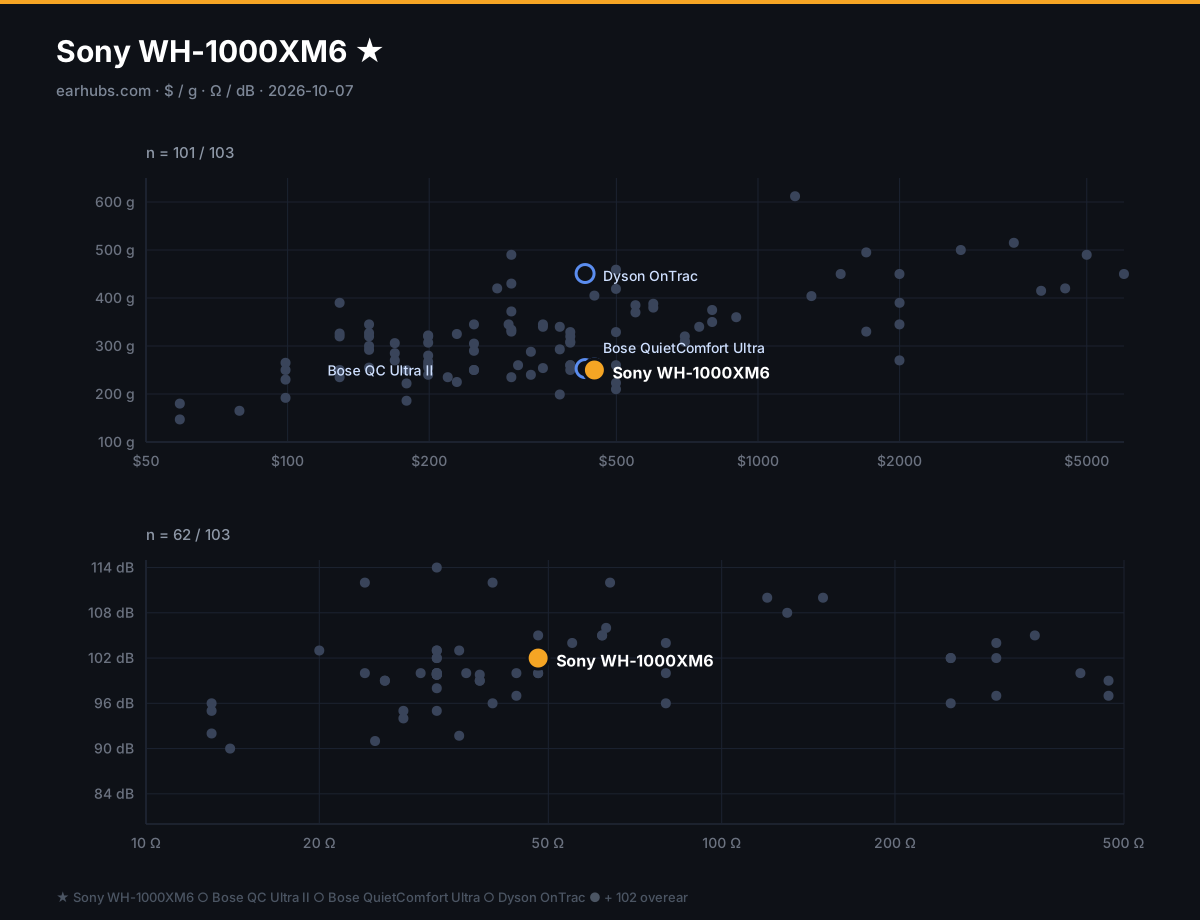
Across this over-ear shelf its price ranks 33rd (102 models with a price) and 7th most expensive of the 27 models in the $300–500 band — not the cheap option, but the upper-middle of that tier. At 250 g it ranks 17th lightest of the 101 models with weight data, i.e. the lightest 20%. Impedance is the interesting number: 48 Ω is the highest of the 45 wireless over-ears here (tied with the WH-1000XM5), where wireless models normally sit at 24–32 Ω — and that only shows up on a wired connection.
2. What the numbers change in daily use
Bluetooth 5.3 plus LDAC means a high-resolution path around 990 kbps on Android devices that support it, while an iPhone falls back to AAC — the same headphone has a different ceiling depending on the phone. At 102 dB sensitivity it is easy to drive, and 48 Ω still does not need an amp in wired mode. The rated 30 hours per charge (40 hours with the case) works out to roughly one charge every two weeks at 2 hours of commuting a day.
3. Fit, noise cancelling and use cases
In this form factor 250 g lands in the lightest 20%, and it is 201 g lighter than the Dyson OnTrac at the same price — a difference anyone wearing it 6+ hours a day feels immediately. Adaptive ANC plus a microphone make it a good commute and office headphone; but no water-resistance rating is published, so sport and rain are out.
4. Head to head with its three closest rivals
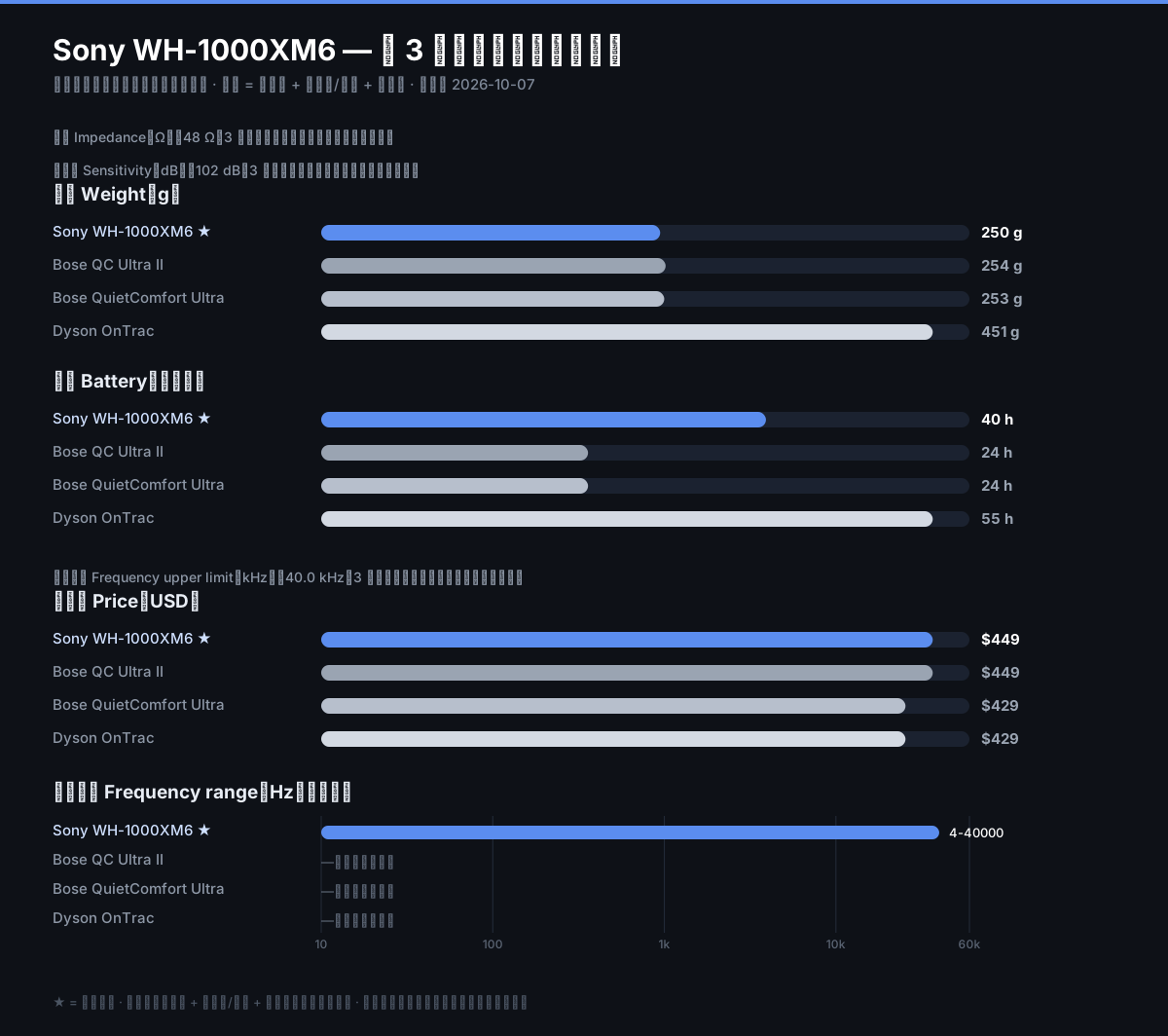
The three closest rivals are the Bose QC Ultra II ($449), the Bose QuietComfort Ultra ($429) and the Dyson OnTrac ($429). Against both Bose models the XM6 weighs essentially the same (250 g vs 254 g and 253 g) but adds LDAC; against the OnTrac it is 201 g lighter, at the cost of 30 hours versus 55 hours of battery. Choose the XM6 for LDAC and the fuller spec sheet; between the two Bose models there is very little to split; the OnTrac's edge is materials and battery, not weight.
5. Three weaknesses worth stating
- No water-resistance rating is published: sweaty workouts and rainy commutes are out — the clearest difference from sport-oriented headphones.
- Battery is not a standout: the Dyson OnTrac (55 h), Sennheiser Momentum 4 (60 h) and Edifier S3 (82 h) all outlast its 30 hours (both Bose models sit at 24 hours, below it).
- Its price sits high in the tier: $449 is 7th most expensive of 27, while the near-identical WH-1000XM5 is $399.
- High-resolution audio needs Android: LDAC is a real edge over the same-price Bose models, but an iPhone can only use AAC, so that edge goes unused.
6. What to buy instead at the same price
- Same spec sheet, less money: Sony WH-1000XM5, $399 — 48 Ω / 105 dB / 250 g / 30–40 hours / LDAC. One generation older, identical impedance and weight.
- A lighter noise-cancelling over-ear: Bose QuietComfort 45, $329 — 240 g, 24 hours, but no LDAC.
- Longer battery: Sennheiser Momentum 4 ($379, 293 g, 60 hours) or Edifier S3 ($399, 329 g, 82 hours).
- More weight for more runtime: Dyson OnTrac ($429, 451 g, 55 hours).
- Actually you do not need ANC: on the open wired side, the Audio-Technica ATH-R70xa ($379, 470 Ω, 199 g) and the Sony MDR-MV1 ($499, 24 Ω, 100 dB, 223 g) are two entirely different routes.
7. Who it is for — and who it is not
- Good for commuting and office: adaptive ANC with 30 hours per charge.
- Good for Android users: LDAC is its hard edge over same-price Bose models.
- Not for sport: no water-resistance rating, and far heavier than open-backed models.
- Not for pure wired monitoring: half of its value is the wireless link and ANC, which a wired tool role wastes.
Data note: every claim here comes from maker-published specs in our own product database and same-price comparisons (price, weight, impedance, sensitivity, frequency response, codecs, battery and ANC are all checkable fields). No unmeasured listening impressions are included; prices and specs follow the maker's latest published figures.